An escrow account in Sri Lanka is a systematic way for property buyers to manage payments for a real estate transaction. Instead of being paid directly to a property developer, the money is held by an independent institution and paid out according to conditions in an escrow agreement. Real estate escrow can give buyers purchasing an apartment under construction more visibility regarding the payments held and released. This guide explains how escrow accounts work in real estate, who holds the funds, the benefits and the questions apartment buyers should ask before committing to a purchase.
What is an Escrow Account in Sri Lanka Real Estate?
An escrow account is a setup in which an independent third party holds money until contractual conditions agreed upon have been met.
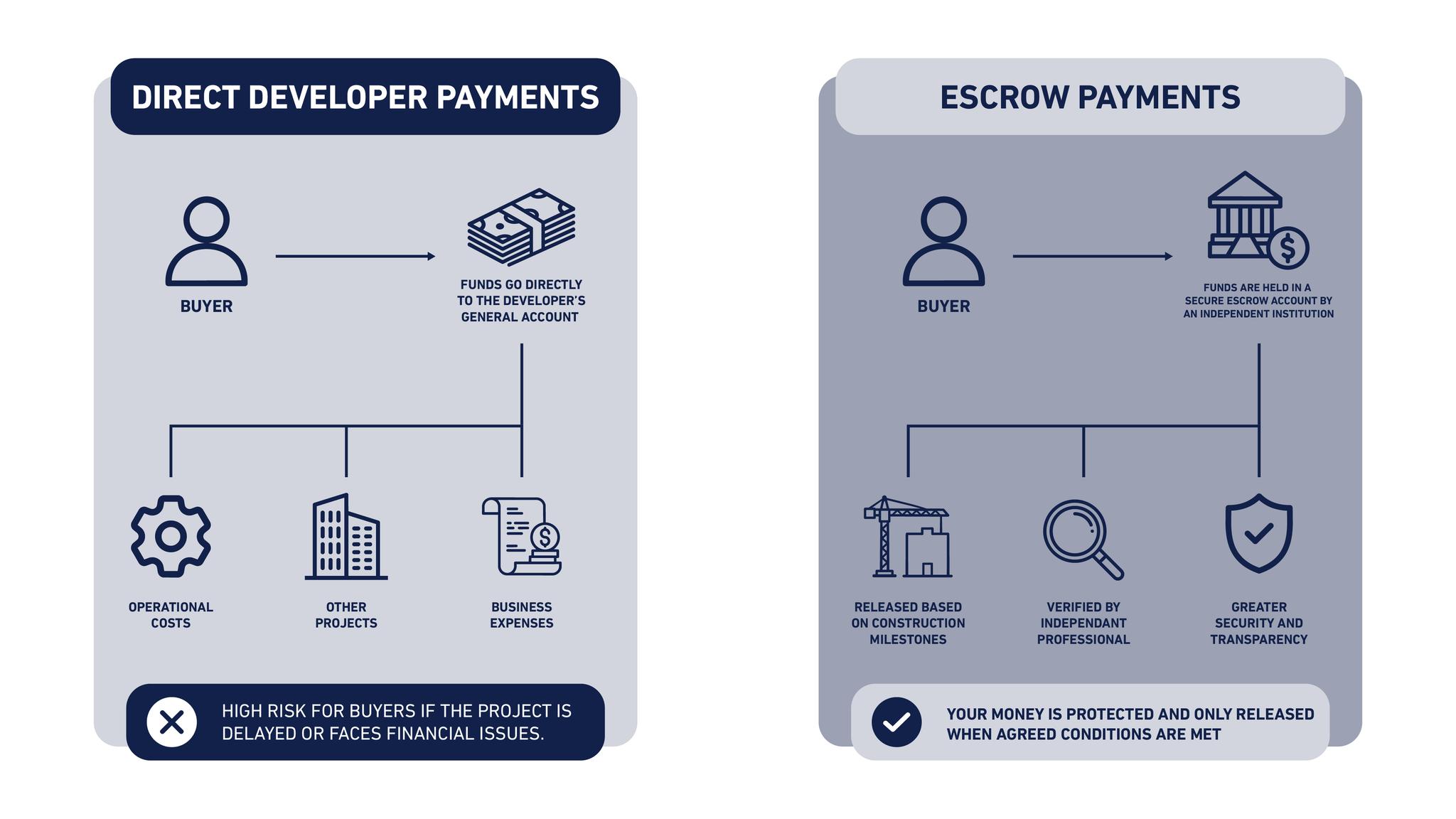
In a real estate transaction, the buyer puts cash into an escrow account rather than wiring it directly to the developer or seller. The designated escrow institution shall hold such funds in accordance with written instructions and shall disburse such funds when the applicable conditions are met.
In simple terms, a real estate escrow account is the separation of two parts of the transaction, the buyer making a payment and the receiving party getting to use it. An escrow account for apartment buyers is especially crucial in off-plan property investment because payments may start before the construction is finished. The escrow provides a paper trail for you to see how your money is handled from purchase to handover.
The 4-Step Escrow Process for Property Buyers
The precise property escrow process in Sri Lanka will differ from development to development but generally consists of four main stages:
Step 1: The Escrow Agreement
The account rules are established by the buyer, developer or seller, and the escrow institution. The escrow agreement should set out the responsibilities of each party, the conditions for release of funds and the documents or instructions required. Buyers will need to read the escrow agreement in conjunction with the Sales and Purchase Agreement, to understand how it fits into the wider property transaction.
Step 2: Apartment Buyer Deposits Money
The buyer shall deposit the relevant payment to the designated escrow account. The appointed institution is to hold the money in accordance with the agreement and to make no immediate free direct payment.
Step 3: Conditions Agreed Upon Are Assessed
For an apartment under construction, fund releases can be tied to certain construction milestones or other contractual requirements. The agreement should describe how each condition is verified and what evidence of support is needed.
Step 4: Release of Escrow Funds
The escrow institution releases the authorized amount after the stated conditions have been satisfied. Any remaining funds are held until the requirements for the next release are met. Buyers should look at the setup for their own development, rather than assume that all escrow accounts are created equal.
Advantages of Escrow Accounts in Real Estate
Escrow accounts are beneficial in real estate because they restrict who can hold and disburse the funds.
Key Benefits for Off-Plan Apartment Buyers
More Transparency on Property Payments: Buyers can know who is holding their payment, what is required and when the money may come out. This adds a lot of clarity to the financial process throughout the buying of the property.
Systematized Construction Milestone Payments: When releases are tied to agreed project milestones, buyers can better see how their payment schedule relates to construction progress.
Clear Responsibilities: The escrow agreement can specify who provides supporting documents, what conditions have to be satisfied and who can authorize release. This reduces the uncertainty of the parties.
Extra Confidence for Off-Plan Apartment Buyers: A well-designed escrow payment process can increase confidence during the period between purchasing an apartment and receiving the finished property.
Primarily, escrow prevents the release of money outside of the conditions laid out in the agreement. If applicable, the independent institution will hold the payment until the requirements are met. This measure of property buyer protection can help clear up where the payment is kept, who administers the funds, when the developer might be paid, what conditions must be fulfilled, how payments tie to agreed project requirements, and what documentation will be needed for the release.
However, escrow controls custody and release of funds. It does not of itself assure the completion of a project or the recovery of an investment. Legal, financial and property due diligence is still critical.
Why Property Developers Use Real Estate Escrow: Property developers use real estate escrow to create a documented framework to manage payments from buyers. Reputable property developers use escrow because buyers can have more visibility into the payment process through independent custody and agreed release conditions. Escrow also offers transparent payment processes, defined responsibilities for each party, and stronger buyer confidence.
Escrow should not be your only consideration when choosing a development. Buyers should also review the developer’s track record, title documentation, approvals, contractual terms, construction capacity and proposed handover arrangements.
Escrow vs. Regular Payment & Who Keeps Funds
In a regular payment, money flows directly from the buyer to the recipient in accordance with the sale agreement. In an escrow payment, the buyer first deposits the money in an independent institution, which releases funds only when the conditions in the escrow agreement have been satisfied.
Who Keeps Escrow Funds for Property Transactions? The funds shall be held by the independent institution designated in the escrow agreement, such as a bank, financial institution or authorized escrow agent. Buyers should verify the institution holding the funds, account and payment details, release terms, required documentation, obligations of each party, and dispute resolution processes before transferring funds.
Questions Apartment Buyers Should Ask Before Buying
Make sure to ask before committing to a property purchase:
- Will the development be subject to any escrow arrangement?
- Who controls and owns the escrow funds?
- Can I see the escrow agreement before I sign it?
- What triggers each release, and how are construction milestones checked?
- What if a release condition is not fulfilled?
- What is the relation between the Sales and Purchase Agreement and the escrow agreement?
- Are there any escrow admin fees?
Buyers shouldn’t assume every development automatically includes escrow. Check with the developer, review contract documents, and seek independent legal advice from a qualified Sri Lankan legal professional before signing agreements or transferring funds.
John Keells Properties: Escrow for Buyer Confidence
In its off-plan developments, John Keells Properties uses escrow arrangements to offer an additional layer of structure around buyer payments. An independent institution holds money and releases it according to the conditions for the respective development. This ensures that apartment buyers enjoy better visibility of how their payments are handled throughout the property investment journey, demonstrating commitment to transparency, clean financials, and buyer confidence.
When considering a property, buyers should look beyond location, design, amenities and price. Understanding how payments are held and released is an essential part of an informed real estate investment decision. A well-documented arrangement provides transparency over who controls the funds, what controls their release, and how payments fit into the overall transaction.
Frequently Asked Questions:
When do escrow funds get released? The funds are released once the escrow agreement conditions have been met and supporting documentation is provided.
Are Escrow Accounts Safe for Buyers? Escrow provides structure and transparency, but effectiveness depends on the agreement, institution appointed, and release conditions. Independent professional advice is recommended.
Does Escrow Mitigate Risk for Off-Plan Purchases? Escrow controls payment timing and reduces payment-management risks, though buyers must still evaluate the developer, title, approvals, and construction status.
For further information and guidance on how escrow arrangements apply to a specific development, contact the John Keells Properties team.